
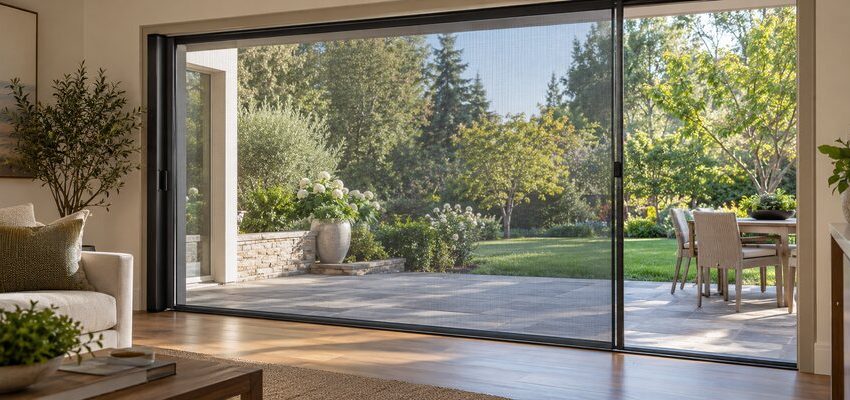
An open doorway can make a home feel brighter and more connected to the outdoors. It can also invite mosquitoes, flies, and other unwanted visitors inside. Retractable screens address this everyday challenge by providing a mesh barrier that extends when needed and stores away when the opening should remain clear.
For homeowners interested in maintaining clean sightlines, retractable screens offer a flexible alternative to permanently visible screen panels. Understanding their construction, mesh options, and maintenance requirements helps explain where they fit into a home and what to expect from daily use.
How Retractable Screens Work
A retractable screen uses mesh that rolls into a protective housing, often called a cassette. Depending on the system, the screen moves horizontally across a doorway or vertically over a window or outdoor opening. Guides help control its movement, while a pull bar or bottom rail supports the leading edge.
Manual systems are operated by hand. Motorized designs use an electric drive and may include a wall switch or remote control. The operating method should suit the opening and the way people use it. A frequently used kitchen doorway, for example, presents different practical demands than a large covered patio opening.
The defining feature is the ability to retract the mesh when it is no longer needed. This allows the screen to remain less visually prominent while stored in its housing.
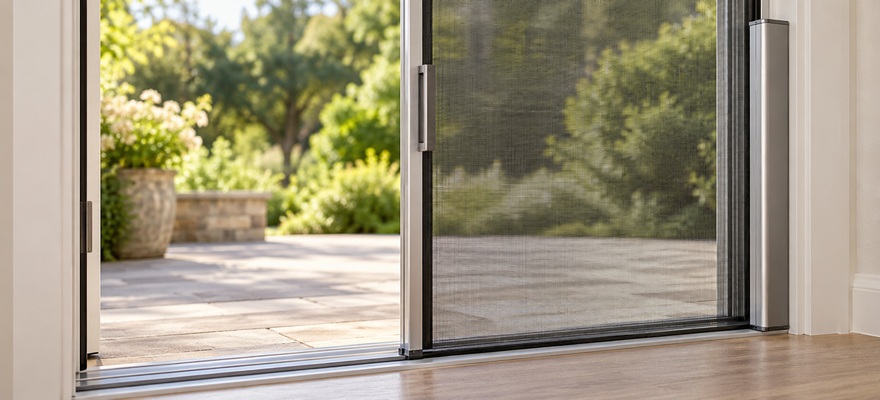
Everyday Comfort and Flexible Access
Retractable screens allow an opening to remain screened while outdoor air passes through the mesh. They can make it easier to enjoy a mild evening or connect an indoor living area with a backyard gathering space.
That flexibility is especially useful where a permanent screen door would interrupt the appearance or movement of a large opening. When retracted, the mesh clears the passage for carrying furniture, serving food outdoors, or moving between adjoining spaces.
However, a screen does not control outdoor temperature, humidity, or air quality. The comfort of natural ventilation still depends on local conditions. During periods of smoke, heavy pollen, or extreme heat, keeping the primary doors and windows closed may be more appropriate.
Understanding Mesh Options
Mesh selection affects visibility, airflow, shading, and privacy. Standard insect mesh generally has a more open structure, while solar and privacy fabrics tend to be denser. The resulting differences can noticeably change the view through the screen.
These characteristics involve trade-offs. A fabric selected for greater shading may feel visually heavier than a more open insect mesh. Privacy also depends on lighting conditions, so a screen that limits views during the day should not automatically be expected to provide the same effect after dark.
Viewing physical samples at the intended opening can help clarify these differences. Evaluate the mesh from both sides and under different lighting conditions rather than relying entirely on a small product photograph.
Why Fit and Installation Matter
A retractable screen is a moving assembly, so alignment matters. The housing, guides, and pull bar must work together without binding or leaving unintended gaps around the opening.
An installation assessment should consider the doorway’s dimensions, mounting surfaces, handles, trim, and threshold. Existing doors must still operate freely, and the screen should have sufficient clearance throughout its travel.
Large openings require particular attention to the selected system’s size limits and installation requirements. A screen suitable for a standard entry door should not be assumed to perform the same way across a much wider opening. Product specifications and site conditions need to be considered together.
Maintenance and Daily Operation
Routine care helps preserve smooth operation. Dust, grit, and leaves can collect in tracks and interfere with movement. Keeping these areas clear is a straightforward but important maintenance task.
Cleaning instructions should come from the manufacturer. For example, Phantom Screens recommends gentle cleaning with mild detergent and water, keeping tracks free of debris, and allowing wet mesh to dry before retracting it. Its guidance also cautions against harsh chemicals and pressure washing. Lubricants should be used only as specified for the particular system.
If the screen begins dragging, retracting unevenly, or making an unfamiliar noise, forcing it can make the problem worse. Check for visible obstructions and arrange service when necessary.
Setting Realistic Expectations
Retractable insect screens are intended to help manage insects and, with suitable mesh, provide shading. They should not be treated as security barriers or relied on to contain children or pets.
Their long-term usefulness depends on appropriate sizing, suitable mesh, careful installation, and consistent maintenance. When those elements suit the home, retractable screens provide a practical way to enjoy an open doorway while retaining the option to tuck the mesh away.

